
 NYCCLI grew out of several simultaneous efforts to address the housing crisis that identified Community Land Trusts as a promising tool, and have since joined together to lay the groundwork for CLTs across the City. These include:
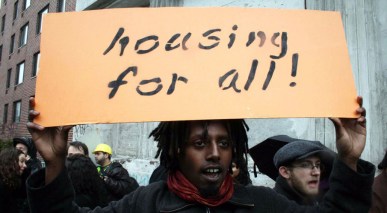
The work of Picture the Homeless (PTH), a member-led organization that uses research and action to challenge public policies that exacerbate inequality and systemic injustices, and that are at the root causes of homelessness and housing insecurity. Members of PTH’s Housing Campaign identified community land trusts and mutual housing associations as an important model for creating housing as early as 2003-2004, and cited them in its 2007 report on vacant property in Manhattan, Homeless People Count. PTH worked with Professor Tom Angotti and the Hunter College Center for Community Planning and Development to document vacant land and housing in 24 of the NYC’s community districts and found enough to house almost 200,000 people- nearly four times the population of the City’s overcrowded shelter system. PTH’s report, Banking On Vacancy, raised questions about how low-income residents could gain control over land and stop the speculation in and destabilization of neighborhoods that regularly produce homelessness. This led to a class with Professor John Krinsky at City College with City College students and PTH members and staff to learn about the history and ongoing issues in affordable housing and community control in New York City, including Community Land Trusts and Mutual Housing Associations.
In the wake of the subprime lending and foreclosure crisis, New Economy Project (formerly known as the Neighborhood Economic Development Advocacy Project) and its community partners began exploring CLTs as a strategy to combat foreclosures in hard-hit Black and brown communities in New York City. The organization collaborated with a planning workshop at Columbia University, led by Professors Jeffrey Lowe and Peter Marcuse, to produce a report outlining strategies to support CLTs that could serve as a bulwark against speculation and displacement.
New York City is divided into 59 Community Boards, which have an advisory role in land use and zoning issues and play a role in coordinating city services across the city’s neighborhoods. Community Board 11 worked with a planner, F. Nicolas Ronderos from the Regional Plan Association to document threats to rent-regulated housing in East Harlem. The report paralleled a good deal of the information collected by the Picture the Homeless project at City College, and also called for the formation of a CLT as a possible vehicle for preserving affordable housing.
The work of the Housing Environments Research Group (HERG), Graduate Center, City University of New York. Led by Professor Susan Saegert, HERG has done an extensive amount of research into forms of collectively owned, resident-controlled, and permanently affordable housing- in particular, Limited Equity Cooperatives and Community Land Trusts.
When members of these various efforts became mutually aware, we arranged a convening at the Ford Foundation in October 2012 to discuss ways of working together. We established four working groups: policy/legislation, education/outreach, case study/demonstration project, and governance and met again at Taino Towers in April 2013 for a CLT Summit. We shared our work with each other and with other groups from around the city, and created work plans for the next three months. Work group activities continued and we came together again in July 2013 as the “New York City Community Land Initiative.”
 nyccli.org